


Understanding Supported Living, Residential Care, and Domiciliary Care (and what it’s like to work in each)
If you’re new to social care, the terminology can get confusing quickly. You might be exploring options for someone you care about, considering a role in the sector, or already working in care and wanting a clearer picture of how each setting differs.
This guide breaks down three common types of care in the UK:
- Supported living
- Residential care
- Domiciliary care (home care)
You’ll find a simple explanation of what each one is, who it tends to support, and a realistic snapshot of what it can be like to work there.
Quick note
Every service is different. Job titles, staffing levels, routines, and the type of support offered will vary by provider, location, and the people being supported.
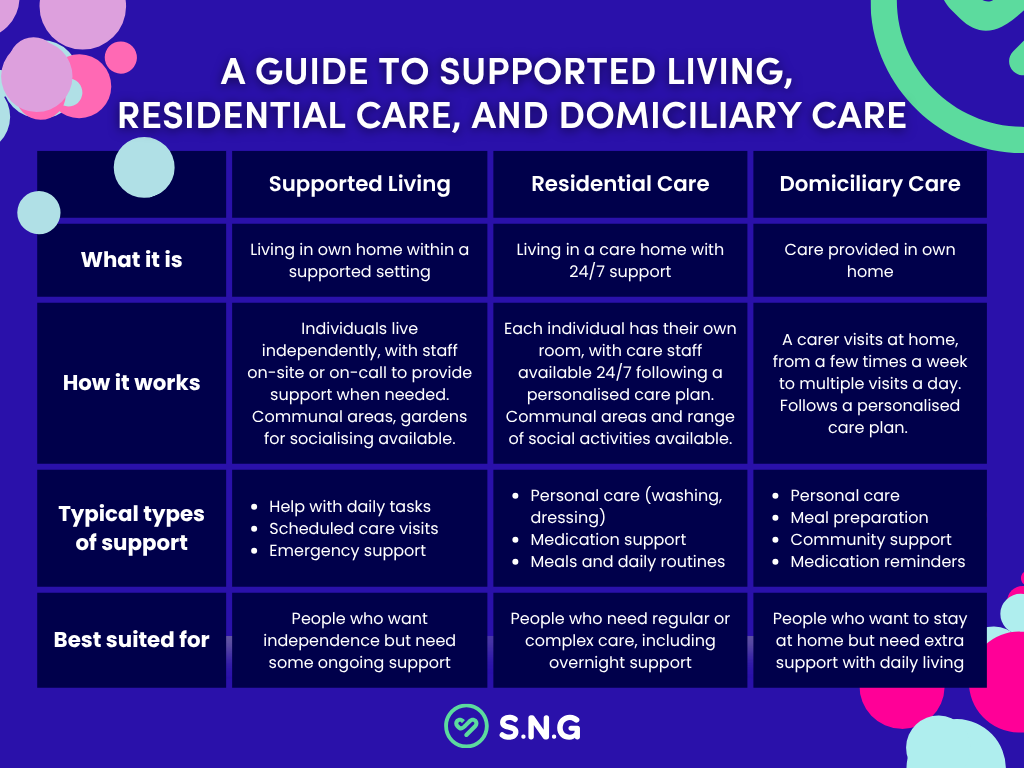
Supported living
What it is
Supported living usually means someone has their own self-contained home (often a flat or bungalow) with support available. The aim is to help people live as independently as possible, with the right level of assistance in place.
You might also hear it called:
- Housing with support
- Assisted living
- Sheltered housing / extra-care housing (varies by scheme)
What support looks like day to day
Support can include:
- Scheduled visits (personal care, prompting, meal support)
- Help with routines, appointments, shopping, budgeting, or building life skills
- Emergency support if something goes wrong
- Encouraging independence and choice
Supported living can suit a wide range of people, including older adults, autistic people, and people with learning disabilities. Some residents need minimal support, others need more structured help, but typically it’s less intensive than residential care.
What it’s like to work in supported living
Working in supported living often involves a mix of practical support and coaching-style support. You’re supporting someone in their home, so dignity, choice, and boundaries really matter.
You may find the work includes:
- Supporting independence (not doing everything for someone)
- Building confidence with daily living skills
- Supporting community access and activities
- Keeping clear notes and following person-centred plans
- Responding calmly to unplanned situations (anxiety, behaviours of concern, emergencies)
Who it suits: people who enjoy relationship-based work, routine-building, and supporting independence over time.
Residential care
What it is
Residential care is care provided in a dedicated facility such as a care home or nursing home. Staff are on-site 24/7. Residents usually have their own room (sometimes en-suite), with shared spaces like lounges, dining rooms, and gardens.
There are different types, including:
- Residential homes (personal care)
- Nursing homes (nursing support on-site)
- Dementia care settings
- Dual registered homes (mix of residential and nursing)
What support looks like day to day
Support commonly includes:
- Personal care (washing, dressing, toileting)
- Medication support (and sometimes nursing care)
- Meals and hydration support
- Mobility support and falls prevention
- Activities, social time, and community engagement where possible
Residential care can be the right option for people who need regular support throughout the day and night, or who have complex needs that are difficult to manage safely at home.
What it’s like to work in residential care
Residential care work is often fast-paced and team-led, with a strong focus on routines, safety, and consistency. You’ll typically work alongside a wider team, and there’s often a clear structure to the day.
You may find the work includes:
- Supporting multiple residents across a shift
- Working closely with colleagues (handover quality really matters)
- Supporting mealtimes and medication rounds
- Communicating with families and visiting professionals
- Helping maintain a calm, welcoming environment in communal spaces
Who it suits: people who like teamwork, variety, and a setting where support is always close by.

Domiciliary care (home care)
What it is
Domiciliary care means a carer visits someone in their own home to provide support. Visit times can range from a couple of calls a week to multiple calls a day, depending on need.
This option can work well for people who want to remain in familiar surroundings, while getting help with daily living.
What support looks like day to day
Support may include:
- Personal care
- Meal preparation and hydration prompts
- Medication prompts (and support within competency and service policies)
- Light domestic tasks related to care
- Companionship and wellbeing check-ins
Some packages are short-term (for example, after hospital discharge), while others are ongoing.
What it’s like to work in domiciliary care
Home care is very people-focused and can feel incredibly rewarding, especially when you’re helping someone stay independent at home. It also comes with the practical realities of travel and lone working.
You may find the work includes:
- Travelling between visits and managing time well
- Building rapport quickly and working respectfully in someone’s home
- Adapting to different routines, environments, and family dynamics
- Reporting concerns clearly (health changes, safeguarding issues, medication concerns)
- Being organised with notes, apps, and care plans
Who it suits: people who like independence, one-to-one support, and working out in the community.
So, which one is “best”?
There’s no one-size-fits-all. The right option depends on:
- Care needs now (and likely changes over time)
- Safety and mobility
- Independence and routine preferences
- Family support and local availability
- The person’s own goals and quality of life
How we can help at S.N.G Healthcare
We support care providers by finding great people for supported living, residential care, and domiciliary care roles.
We’re also pleased to share that we can now provide domiciliary care packages too, supporting people to stay safe and well in their own homes with the right level of care.