

A closer look at the people behind the care: Meet Ijeoma
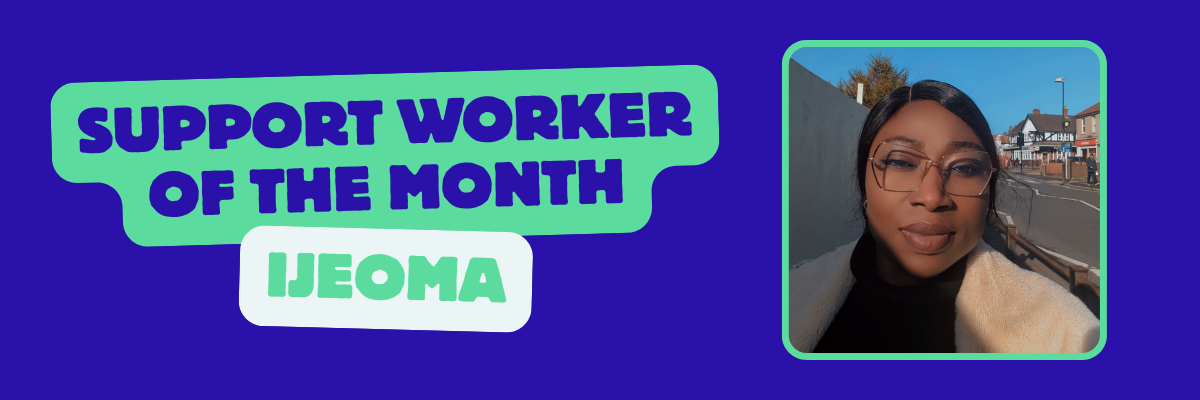
This month, we spoke with Ijeoma, known as IJ, our Support Worker of the Month for October.
Ijeoma has been working with S.N.G Healthcare for just over a year. Her experience includes supporting children, young people and adults, and she spoke with us about her personal journey into care, the fulfilment she finds in her work and the lessons she takes home.
How did you first get into support work?
It all started during COVID. I studied Science Laboratory Technology and specialised in microbiology, but after some time I drifted away from the healthcare industry completely.
During COVID, I saw the importance of the health industry. My dad is somebody who has been living with diabetes for over 47 years now. It was quite emotional seeing people go through what they had to go through without the support system they needed, because I saw the support my dad needed and how it benefited him.
I went back into healthcare and was juggling both my career and the health industry. When the opening came up in the UK that they needed healthcare workers, I said, “Okay, let me do more.”
I had quite a lucrative career back home. But I also have two sisters who are nurses, and they said it’s quite a fulfilling career.
When I went into it, oh my word, it was a different world altogether for me. The empathy, the love, the loneliness a lot of people felt. That was what really made me say, “This is where I want to be.”
It’s a passion for me, and that’s why I try as much as possible to put in my best.
What do you enjoy most about being a support worker?
It gives me job satisfaction. It gives me life fulfilment that you’re a part of these people’s journey.
I’ve had some of the people I support see me on the road and say, “IJ! IJ!” Someone I supported in another home called me and said, “I’m not seeing you any longer. What’s happening? I want you to come around.”
I recently supported someone who made real progress while we were working with him. A team who had known him for over ten years told us they had never seen him doing so well.
What more satisfaction can you get when you receive that kind of report from a team, that the person you’re working with has developed to that extent?
What matters to you when supporting children and young people?
A lot of children have been through a lot. Sometimes, all they need is for you to give them a boost and tell them, “You’re okay. You’re doing good. You’re loved.” Just little things that could actually make them blossom.
I feel a lot of empathy. I show them they’re loved and tell them, “You can do it.”
Sometimes, when they react, I don’t take it personally. If you understand their background, you try as much as possible to see how you can help them.
I want them to know, “You’re in a safe place. I’m here to support you. I’m here to give you the best.”
You just have to learn to be kind and supportive, despite the odds.
What do you find challenging about the role?
One of the biggest challenges for me is feeling that there should be firmer boundaries in some situations.
For example, a child is registered to go to school but wakes up and says, “I don’t feel like going.” If there’s a good reason, that’s valid. But when it happens repeatedly and the response is, “It’s their decision,” I find that difficult. Education will benefit that child, not just now, but in the future.
Personally, I sometimes feel we’re enabling choices that aren’t helping them in the long term. We’re supposed to support these children, and it’s painful when you feel something would benefit them but you’re not in a position to act.
Different homes approach this differently. I’ve sat with a manager and asked questions about how they set boundaries, because their approach was different from what I’d seen elsewhere.
As agency staff, you cannot take what happens in one home and apply it in another. You have to work within each organisation’s rules and regulations. That’s something I respect and understand but find challenging at times.
Can you share an experience that has stayed with you?
I supported an adult who had been living in a home with several other people. He moved between homes, and another company then asked whether anyone could recommend people who could support him. They recommended me and another support worker.
By then, he was living alone with two-to-one support. We drafted a schedule for him and helped organise his daily life.
It was difficult at first, and it took a while, almost a year. But gradually, he started following the routine.
He started going out into the community. When people who had worked with him for years saw him, they kept wondering, “Is this the same person?”
I think the setting made a difference. It was just him, no longer living with a lot of other people. I think that was what he needed.
What has support work taught you?
The first and most important thing it has taught me is patience.
Another thing is that it has taught me not to be judgemental. A lot of people have gone through trauma, and that informs the way they behave sometimes.
It has changed my perception of judging people on their physical appearance or just what I see. You don’t just make an assumption about someone because of their attitude. There is a journey that person has gone through.
It has also taught me not to carry some things in my mind. A child might use hurtful language, but you come back to work the next day and they’re hugging you. Or you’ve been away for a week or two and they tell you they’ve missed you.
They’ve said what they wanted to say at that point in time and moved on. Why are you still carrying it in your heart?
Those are some of the lessons I’ve learned over time.
Has what you’ve learned at work helped you at home too?
Yes. I’ve got three boys who are doing well. When I’m talking to my boys, I try to apply some of those things because it’s a realistic approach.
Seeing the benefits in my children, applying what I teach others and helping them understand the consequences of situations, is playing out positively for me.
Recently, my son got a degree apprenticeship. With his first paycheque, he said, “Mama, what did you say you needed? You said you had some bills you needed to settle.”
He gave me the money because he didn’t want me to struggle so hard.
It was quite emotional for me that my children could see what I was going through and put themselves in my position. It’s fulfilling for me. I’m happy.
How do you look after yourself outside work?
I’m somebody who thinks a lot. I reflect a lot.
In my free time, I go out or visit people to clear my head. I go to the gym, and I’m taking swimming lessons. I’m also trying to get into yoga.
My kids are actually good distractions for me. I’m a single parent, so any time I spend with them, I try as much as possible to make sure it’s fulfilling and relaxing.
Those are some of the ways I’m able to manage those feelings and balance my emotions.
What advice would you give someone thinking about support work?
It’s one of the best careers you can ever get. It’s a career where you can sit back, reflect and give yourself kudos on so many occasions.
It requires a lot of patience and endurance, but it’s quite a fulfilling role.
Thank you, Ijeoma
Thank you to Ijeoma for sharing her experiences so openly, and for the care and commitment she brings to the S.N.G team. We’re delighted to celebrate her as our Support Worker of the Month for October.
Know someone who would make a brilliant health and social care professional? Refer a friend to S.N.G Healthcare and help them take their next step in care. Click the image below to take you to our referral form.