

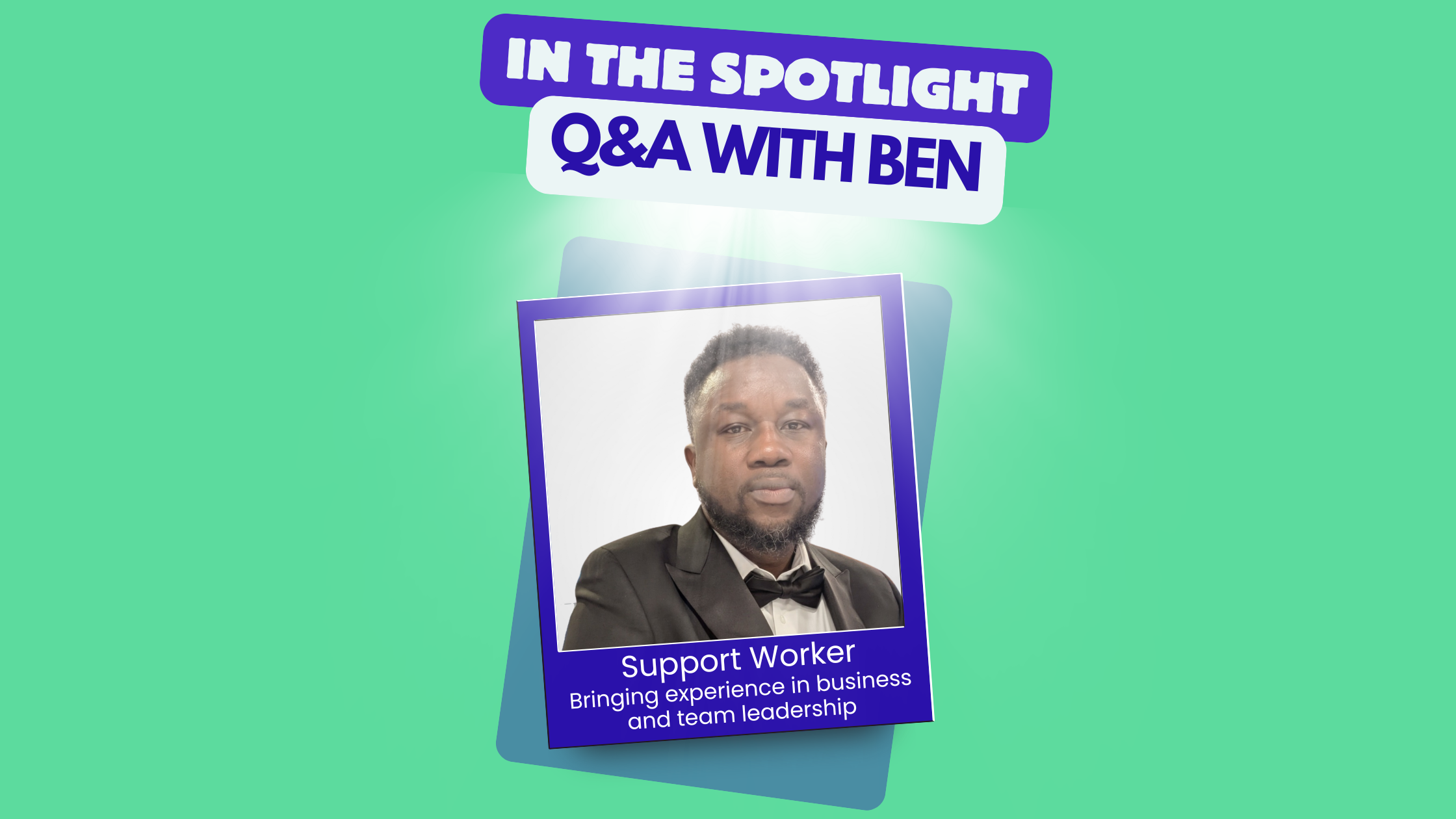
A closer look at the people behind the care: Meet Ben
This month, we spoke with Ben, our Support Worker of the Month for November.
Ben’s career has taken him through sales, customer service, team leadership, supply chain and logistics before moving into support work. Across those different roles, one thing has remained constant: working with people.
Ben joined S.N.G Healthcare in August and he has been an absolute asset to the S.N.G team. This month we talked about his journey into care, finding ways to connect with the people he supports and why making a meaningful contribution matters to him.
“Ben is a delight to work with; he is patient and kind as well as good fun! He receives great feedback at the homes we send him because he ensures he gets to know the service users, he listens and understands. We are very lucky to have him on our team! Thank you Ben!” – Karen Trickett (Compliance and Temps)
How did you feel about being named Support Worker of the Month?
A little bit overwhelmed. I remember asking, “What’s the measurement?” I know there is feedback from where you work, but I wasn’t expecting it.
I’m honoured.
How did you first get into support work?
My first job was as a telesales executive for a pay-TV company in Nigeria. Before that, I had some experience selling things for my dad, so communicating with people made it quite easy for me to move into telesales.
Over time, I noticed I was doing more customer service. Customers would come back after a sale, and I would help them. I moved into a front-desk customer service role, then became a team leader and later a supervisor.
I realised I had a passion for people, helping people and resolving issues. I enjoyed doing it a lot.
Before coming to the UK, I was working in supply chain and logistics. I wanted to continue in that line of work, but I couldn’t get a job here. I went into warehouse work, hoping I could move into supply chain from there, but it wasn’t working out.
After speaking with my siblings, I started looking at what else I could do. I needed to find a place where I could be relevant, helping people.
That led me into support work. I’ve been able to help people with different issues, especially young people developing their independence and everyday skills. It’s been good so far.
What do you enjoy most about being a support worker?
Seeing smiles on people’s faces and helping them through issues is rewarding. I want to see that my support has helped someone move forward. When they look forward to seeing me, I know I’m doing something meaningful in their life.
I remember supporting a young person, and after a few weeks there was feedback that I had connected well with him, and it was always a good time when I went there to support him. I was so glad that I had made a good impression.
But I also want to see growth. Every day I go somewhere, I’m expecting something. I want to see that my relationship with someone has helped them get better at something.

Can you share an experience where you built a connection with someone and how you did it?
There was a young person who had built a boundary around himself, others struggled to connect with him.
I’m a good cook, so I went into the kitchen and did some cooking. He came down because he could smell it. I offered him some food, and we started getting on.
He liked music, and I had to dig deep into myself because it had been a long time since I’d listened to some of that music. But overtime, by staying with him, listening and learning from him, we became friends and got on very well.
He liked going out, but he didn’t feel safe because he felt people were looking at him.
I said we could go out together and, “Don’t worry, just hold my hand if you feel anything.”
It went well. We went to the shop and came back. We went out again, and we became quite close through that.
How do you decide whether a shift is right for you?
Before I apply for a shift somewhere I haven’t been before, I look up the company and what they do. I want to know what I’m preparing myself for.
I don’t like going to places where I’m not prepared to meet people’s needs.
I want to understand what I’m actually going there to do. I need to be learning, and I need to be able to become part of the team.
I’m someone who wants to be active. I don’t want to go to meet a service user and be told to just sit. So I’ll ask, “What can I do?” I want to be able to contribute.
What has support work taught you about yourself?
Patience. I used to think I was a patient person, but with the requirements of this job, you need extra patience.
Listening is one of the strengths you should have as a support worker. When young people begin to talk, you need to let it flow and think, “Okay, this is what their world is like.”
I need to bring myself into their world and just listen. Sometimes it’s about listening and having some happy moments with them.
Working with young people with needs I hadn’t supported before has also been a learning experience. I’ve had to exercise more patience, sit down, observe and learn how to communicate with them.
It makes me a better person.
Has your experience in other professions helped you in care?
Yes, it has. One thing has been constant through all the different jobs I’ve had are the people.
Different people come into your life, and you have to relate to them. Your interpersonal skills go a long way.
I’ve worked with people from different walks of life, from telesales and customer service to team leadership, supervision and supply chain. I’ve learnt a lot from those experiences.
It’s also about colleagues. I’ll ask, “Are you doing okay?” because it matters to me. If someone isn’t mentally okay, that can affect how they work.
When I had people working under me, I had to teach them things, but life doesn’t begin in the office. I would ask how they were doing and whether everything was okay at home. It’s basic wellbeing.
Whatever profession you’re coming from, your experience can help mould you for a new challenge. You have to dig deep and think, “I have one or two experiences here that could work.”

What advice would you give someone thinking about becoming a support worker?
Before I became a support worker, some people described it as an easy job. You just go in, spend your hours there and get paid.
I didn’t want to be someone who just went in and came out. Life is more than that.
If you’re going to be a support worker, be a support worker for what it’s meant to be. Be able to support the person who needs that support.
Ask yourself, “What else can I do?” Look at the person and think, “Did I actually have any impact?”
What has working with S.N.G Healthcare been like?
Working with S.N.G has been interesting, and I’m thankful for the opportunities I’ve been given.
S.N.G has very good leaders who can see your strengths from afar. I’ve been called about two projects and asked, “Do you think you can do this?” So far, so good.
It isn’t easy working with people you don’t see or interact with every day and still being able to put them in the right places.
I’ve been to the office once and met good, hard-working people. Thank you S.N.G!
Thank you, Ben
Thank you for sharing your experiences so openly, and for the thought and effort you put into getting to know the people you support. Congratulations on being our Support Worker of the Month for November! 💚